Tactical Gloves: A Complete Guide to Sizing and Choosing the Right Glove
11.01.2026Author: Charles Darwin
Tactical gloves are an essential piece of equipment for special forces, law enforcement, military personnel, hunters, shooters, and anyone whose work involves intense physical activity. They protect hands, provide a secure grip, absorb shock, and allow you to work confidently even in difficult or extreme conditions. Moreover, unlike regular gloves, tactical models do not reduce finger sensitivity and allow you to work with small parts.
In this article, we’ll look at what tactical gloves are, the different types available, the materials they’re made from, and how to choose the right model for different tasks.
What are tactical gloves: purpose and benefits
Tactical gloves are a specialized accessory designed to provide reliable hand protection in a variety of conditions, including those associated with official, combat, or active physical tasks. Unlike regular gloves, tactical models perform a variety of functions:
Protection from mechanical damage. Reinforced outer layers protect the skin from direct contact with metal elements, rocks, barbed wire, branches, and other potentially harmful surfaces.
Shock absorption. Many models feature rubber, plastic, or carbon fiber pads on the knuckles and back of the hand. These pads absorb shock and reduce the risk of injury during falls, wrestling, maneuvering, or performing physical tasks.
Improved grip. The palms of tactical gloves are made of non-slip materials (rubber, synthetic, microfiber, silicone). This ensures a secure grip on weapons, steering wheels, tools, or equipment, even in high-humidity environments.
Breathability and temperature regulation. To ensure comfort during extended use, tactical gloves are designed with ventilation inserts, perforations, or breathable fabrics. This prevents hands from sweating or overheating.
Maneuverability and sensitivity. Tactical gloves are designed to allow unrestricted finger movement. They allow you to comfortably pull the trigger, handle equipment, or perform delicate work.
Compatibility with modern technology. Many modern models feature special fingertip pads that allow you to use touchscreens on navigation devices, tablets, or smartphones. This is especially convenient for military personnel, instructors, and tactical shooters who actively use electronics.
Main Types of Tactical Gloves
Tactical gloves are divided into several categories based on the level of protection and the conditions in which they are used. Each type has its own strengths and design features, so it is important to understand the scenarios for which they are designed.
Universal Tactical Gloves
This is the most common and versatile option. Universal models have a wide range of applications. For example, they are useful at the range, on hikes, during training at a shooting range in Lviv, when handling equipment, or during everyday tasks. These models feature reinforced palms and fingers that protect against scratches, cuts, and impacts. General-purpose tactical gloves are typically made from a combination of materials (leather, nylon, microfiber, neoprene). This ensures a balance between durability, flexibility, and comfort. Universal models have an anatomical cut. They do not restrict movement and allow you to handle small parts of equipment or weapons.
Shooting Tactical Gloves
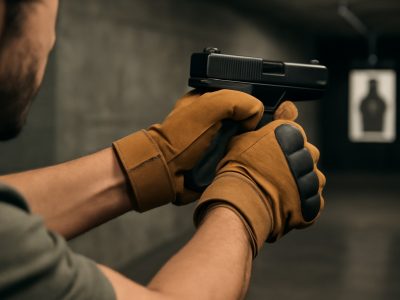
It is extremely important for shooters to maintain maximum finger sensitivity. That’s why tactical shooting gloves are made of thin, flexible materials. The palm is reinforced with leather or textured synthetic pads, providing a secure grip on the weapon. Some models feature an open or folding index finger. This design allows the shooter to confidently control the trigger, make precise aiming adjustments, and manipulate small parts of the weapon. Tactical shooting gloves are used for hunting, training at the range, in competitive shooting disciplines, and in tactical operations.
Models with Reinforced Protection and Rigid Knuckles
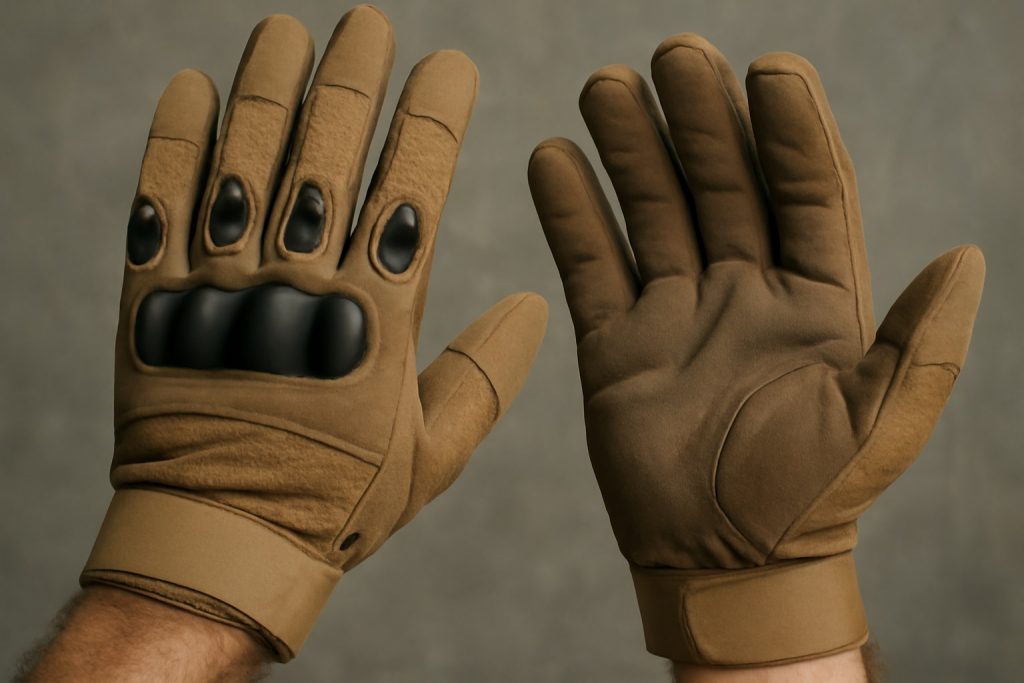
These tactical gloves are designed for demanding conditions where hand protection is critical. They feature rigid or semi-rigid pads on the knuckles and phalanges, reinforced pads on the back of the hand, and shock-absorbing inserts. The palm is typically made of thick leather, nylon, or other wear-resistant materials with additional foam padding. These tactical gloves provide excellent protection against impacts, cuts, abrasion, and contact with hard surfaces.
Fingerless Tactical Gloves
Fingerless models are designed for situations where maximum tactile control is more important than complete protection. They feature open fingertips, allowing you to handle weapons, small tools, electronics, machinery, or adjust equipment with maximum precision. The palm of these tactical gloves is protected, with textured overlays and non-slip elements for a stable grip.
Mountaineering Tactical Gloves
Mountaineering tactical gloves are designed for situations where hands are constantly in contact with hard surfaces, metal equipment, and ropes that create intense friction. They feature a reinforced construction that can withstand high loads and protect the skin from burns and cuts. These models are made from thick genuine leather or highly resistant synthetic materials. The palm is reinforced with additional layers of rubber or polyurethane, improving grip in both dry and wet conditions. Thanks to their ergonomic cut, ventilation zones, and strategically placed seams, these mountaineering tactical gloves are comfortable even during extended use.
Specialized Tactical Gloves (Fire-Resistant and Water-Resistant)
Specialized models are designed for use in conditions where standard protection is insufficient. Fire-resistant tactical gloves are made from materials resistant to high temperatures and open flames. Fabrics such as Nomex, Kevlar, and PBI Gold are used for this purpose. They do not melt or lose shape when exposed to heat. These tactical gloves are used by sappers, firefighters, and those working with explosives or pyrotechnic materials.
Water-resistant tactical gloves are designed for hand protection in rain, snow, or high humidity conditions. They feature a Gore-Tex membrane on the inside, which blocks water but allows air to pass through. This keeps hands dry. These tactical gloves are ideal for search and rescue operations, winter training, and military service in harsh climates.
Materials and Manufacturing Technologies
The following materials are most commonly used to create tactical gloves:
Genuine leather. It provides high elasticity, a comfortable fit, abrasion resistance, and protection from moisture and mechanical damage. This material also ensures a good grip on weapons and tools.
Kevlar. This aramid fiber is exceptionally resistant to cuts, punctures, and abrasion. Kevlar is used in areas that frequently come into contact with sharp objects or require increased protection. It is fire-retardant and maintains its strength even at high temperatures.
Nomex. This is a flame-retardant material used in gloves for special forces, firefighters, sappers, and the military. It does not melt or char and can withstand prolonged contact with high temperatures.
Neoprene. This is a dense, elastic polymer that provides moisture protection, basic thermal insulation, and a comfortable fit thanks to its elasticity. It’s often used on cuffs and the back of the hand.
Nylon and Cordura®. These are synthetic fabrics with high abrasion resistance. Their advantages include tear resistance, good ventilation, and durability under intensive use.
Spandex (elastane). It gives tactical gloves flexibility and improves their fit. Thanks to it, they allow for unrestricted movement and a snug fit.
Thinsulate®. This is an innovative insulation material used in winter tactical gloves. It is thin, lightweight, and retains heat well even in humid conditions.
Rubber and polyurethane overlays. These materials are placed on the palms and fingers to improve grip, impact protection, and shock absorption. In shooting models, these pads are thinner to preserve finger sensitivity.
Modern tactical gloves often combine several materials, such as leather and neoprene, Kevlar and Cordura, spandex and polyurethane pads. Most premium models are created using a multi-layer design, with each layer performing its own function.
Determining Your Size
The correct size of tactical gloves affects not only comfort but also safety. Gloves that are too loose can slip off your hand at the most inopportune moment. If they are too tight, they will restrict movement and cause discomfort. To avoid this, when choosing tactical gloves, it’s best to refer to the international standard EN 420.
How to determine the size of tactical gloves? According to EN 420, two measurements are required:
Palm circumference (measured around the widest part of the palm, excluding the thumb).
Arm length (distance from the tip of the middle finger to the bottom of the palm).
The measurement should be taken on the dominant hand (right for right-handed people and left for left-handed people).
Size chart according to EN 420:
Size
Palm circumference (mm)
Arm length (mm)
XS
152
160
S
178
171
M
203
182
L
229
192
XL
254
204
XXL
279
215
If two measurements fall into different categories, always choose the larger size.
How to Choose Tactical Gloves: Basic Criteria
To make the right choice, you need to consider the purpose of your tactical gloves and the conditions in which they will be used. If you work near open flames or explosives, flame-resistant models made of Nomex, Kevlar, or other heat-resistant materials are the best choice. For work in damp or cold environments, consider membrane or insulated options. When precision and maximum finger sensitivity are paramount, lightweight tactical gloves made of stretch materials or fingerless models are best.
Next, consider the most important criterion: the level of mechanical protection. This is determined by the European standard EN 388:2016. The manufacturer’s markings indicate wear resistance (“A”), cut resistance (“B”), tear resistance (“C”), and puncture resistance (“D”). The higher the index, the more reliable the protection.
When choosing an accessory, it’s also important to consider the season. Summer tactical gloves should be lightweight and wick away moisture. In winter, it’s best to choose insulated models with a fleece lining or membrane that retains heat. There are also demi-season options suitable for a wide range of temperatures.
Before choosing tactical gloves, consider their ergonomics. They should fit snugly but not pinch your fingers, slip, or interfere with movement. Ideally, the design should have an anatomical cut, elastic inserts, a comfortable cuff, and good ventilation. For many users, the special finger pads for using touchscreens are a significant advantage.
Care Instructions
After active use, tactical gloves accumulate dirt, dust, small metal particles, grease, and other residue. They should be cleaned gently. You can wipe them with a soft, damp cloth, or, if heavily soiled, hand wash them in a mild soap solution. Avoid using harsh chemicals, which can damage the leather, membranes, or synthetic fibers. After cleaning, tactical gloves should be allowed to dry completely at room temperature.
To maintain the shape of your gloves, store them in a dry, well-ventilated area. Avoid leaving them in tight pockets or bag compartments for long periods of time, as they may become deformed. The best option is to place them in a special container or case. Before storing and using your tactical gloves, you can apply a water-repellent spray to the gloves. This will protect the material from moisture and dirt and extend the life of the product.
More on this topic
25.11.2025
Handling weapons: basic safety and shooting techniques
Using a firearm always carries risk. That's why anyone who picks up a pistol or shotgun must follow simple yet critical rules to avoid endangering themselves and others. This article summarizes the basic principles of firearms safety. These are skills every shooter should master until they become se
05.12.2025
License for traumatic weapons in Ukraine: who is allowed to have one and how to obtain it
In Ukraine, it is entirely legal to own certain types of civilian weapons, particularly traumatic weapons. These self-defense weapons are considered non-lethal, but if used improperly, they can also cause serious harm. For this reason, the state strictly regulates the acquisition, storage, and carry
02.12.2025
What are tactical eyepieces and why are stinks needed?
Tactical glasses are an essential piece of protective gear for military personnel, special forces, shooters, hunters, and anyone working in high-risk environments. They are designed to protect the eyes from shrapnel, shell casings, dust, ultraviolet radiation, chemicals, and hazardous mechanical imp
25.11.2025
Handling weapons: basic safety and shooting techniques
Using a firearm always carries risk. That's why anyone who picks up a pistol or shotgun must follow simple yet critical rules to avoid endangering themselves and others. This article summarizes the basic principles of firearms safety. These are skills every shooter should master until they become se
05.12.2025
License for traumatic weapons in Ukraine: who is allowed to have one and how to obtain it
In Ukraine, it is entirely legal to own certain types of civilian weapons, particularly traumatic weapons. These self-defense weapons are considered non-lethal, but if used improperly, they can also cause serious harm. For this reason, the state strictly regulates the acquisition, storage, and carry
02.12.2025
What are tactical eyepieces and why are stinks needed?
Tactical glasses are an essential piece of protective gear for military personnel, special forces, shooters, hunters, and anyone working in high-risk environments. They are designed to protect the eyes from shrapnel, shell casings, dust, ultraviolet radiation, chemicals, and hazardous mechanical imp