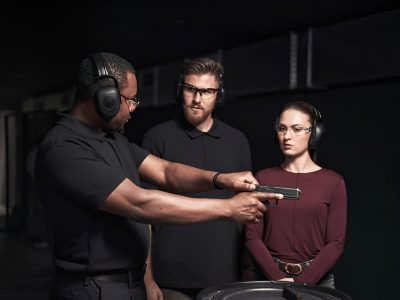
Whether you’re training at the range, practicing target shooting, or mastering basic self-defense skills, the way you hold your pistol directly affects your shot accuracy, gun control, and your safety. An incorrect grip can lead not only to missed shots but also to injury, especially when handling high-powered calibers.
In this article, we’ll discuss why grip technique is so important, how to properly hold a pistol while shooting, and what mistakes to avoid. You’ll also find practical exercises that will help you practice proper hand and body positioning and develop proper shooting skills.
Why is it important to hold a pistol correctly?
In fact, the way you hold a pistol has a profound impact. Your grip affects:
Shot accuracy. A proper grip ensures a stable and controlled hold on the gun. The pistol doesn’t wobble when aiming, the sights don’t shift, and the line of sight remains stable. A secure grip allows for confident control of the pistol and quick return to the starting position after each shot.
Recoil Control. Firing a shot creates a strong recoil impulse that pushes the pistol up and back. A proper grip effectively absorbs this energy, minimizes muzzle rise, and allows for quicker recovery.
Safety. Improper pistol grip can lead to serious injury. Fingers close to moving parts (such as the slide) can result in injury. Furthermore, a weak grip increases the risk of accidentally moving the gun or firing an uncontrolled shot.
Therefore, proper pistol gripping technique not only improves shooting efficiency but also minimizes the likelihood of errors that could injure you or others.
How to Hold a Pistol with Two Hands: Basic Grip Rules
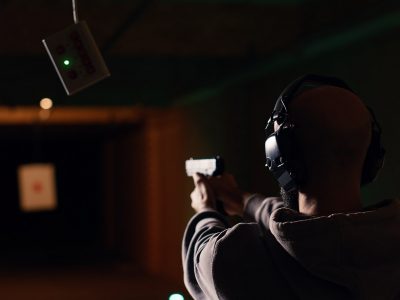
A two-handed grip is the most stable and controlled way to hold a pistol. It allows for even recoil distribution, keeps the gun in the line of sight, and ensures maximum accuracy. To develop a proper grip, it is important to follow a few basic rules.
Grip the pistol with your dominant hand (right for right-handed shooters, left for left-handed shooters). Your bottom three fingers should grip the grip tightly, your thumb should rest along the frame, and your index finger should rest along the body, outside the trigger guard. Your index finger should not touch the trigger until you are ready to fire. This is a basic safety rule.
Cover the free area of the pistol grip with the palm of your supporting hand and press it firmly against the frame. The thumb of your supporting hand is parallel to and slightly below the thumb of your dominant hand. They should be parallel to each other and pointing forward.
Once you’ve aimed at the target, begin squeezing the trigger. The center of the first knuckle of your index finger should rest flat on the trigger. If your finger goes too deep, shots may go left. If it touches the edge, the gun may swing to the right. The trigger pull should be smooth and controlled, without jerking or twitching.
Guidelines for Proper Stance and Body Position While Shooting
A proper stance helps you control your pistol, absorb recoil, and quickly regain your aim. It should be comfortable and stable.
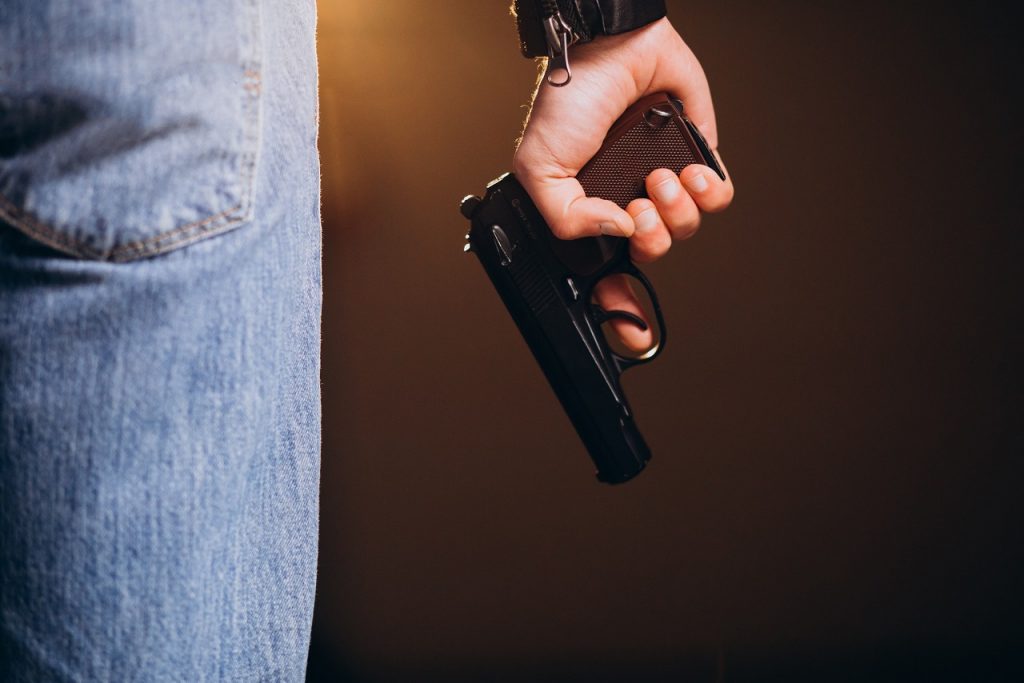
Handsome man actor posing in studio with weapon
Place your feet shoulder-width apart or slightly wider. Extend your front foot half a step forward. Your toes should be pointed directly at the target. Bend your knees slightly, and lean your body forward a few degrees. Your center of gravity should be between your feet.
Your back should be straight, but not tense. Hold the pistol at eye level, as this is how you maintain a proper line of sight. Extend your arms forward, keeping your elbows slightly bent and out to the sides.
Common Grip Mistakes and How to Avoid Them
Grip and holding technique errors occur not only among beginners but also among experienced shooters. And there’s nothing critical about them. The key is to recognize them early and correct them before they become a persistent habit. Below, we’ll look at the most common mistakes shooters make.
Tense, Raised Shoulders
One of the most common problems is excessive shoulder tension. The shooter involuntarily raises their shoulders, trying to absorb recoil with muscle strength. This creates stiffness, accelerates fatigue, and reduces gun control. Raised shoulders also reduce core stability and alter the natural line of sight. To avoid this, the shoulders should be kept down and relaxed.
Dropped Elbows
Another common mistake is elbows pointing downward. In this position, the arms have less control over recoil, the gun barrel rises more, and the time between shots increases. The elbows should be slightly bent and out to the sides. Imagine holding a bulky object between your hands.
Incorrect Support Hand Position
A weak or too low support hand position is a very common mistake. This leads to decreased control of the pistol and a shift in the sights during shooting. Make sure the palm of your support hand fills the empty space on the grip.
Uneven Pressure Distribution Between Hands
Errors often occur due to an improper balance of force between the dominant and support hands. If the shooter grips the grip too tightly with the dominant hand or does not control it sufficiently with the support hand, the pistol will shift when the trigger is pulled. For consistent shooting, an even pressure distribution is essential. As a general rule, the dominant hand provides about 40% of the total force, while the support hand provides 50% of the total force. 60%.
Incorrect Trigger Pull
When the shooter pulls the trigger with the knuckle or fingertip, it creates a lateral force that causes the muzzle of the pistol to move to the side. Proper technique calls for the trigger to be pulled with the pad of the index finger, the center of the first knuckle.
Incorrect Finger Placement
Placing your fingers too high near the moving parts of the pistol creates a risk of injury. The correct grip position calls for the thumbs to be extended forward along the frame. The trigger is pulled only when the gun is pointed at the target.
Why Practice Your Grip with an Instructor
Of course, proper pistol grip technique can be practiced independently, but the best progress is achieved during training with a qualified instructor at a firearms range. A professional instructor notices details that a shooter might not notice on their own—finger position, joint function, tension in the body, or improper stance. They won’t simply point out mistakes; they’ll explain why they occur, how to correct them, and how to avoid them in the future.
Proper pistol grip technique at the initial stage helps develop motor memory. An instructor will prevent erroneous movements or bad habits from becoming ingrained, as correcting them later is much more difficult than learning them in the first place. Moreover, a professional will teach you not to act mechanically, but to understand what’s happening with each movement.
Range training under the guidance of a specialist allows you to practice your grip technique and receive feedback. This, in turn, accelerates learning and increases confidence when handling weapons.
More on this topic
19.12.2025
Carbine vs rifle
At first glance, carbines and rifles may seem almost identical, but in practice, there are significant design and functional differences between them. These nuances determine the ballistic characteristics of each type of weapon and its intended use. In this article, we'll take a detailed look at car
26.11.2025
How to aim correctly at a shooting range
An accurate shot begins not with pulling the trigger, but with proper aim. Everything matters—grip, stance, breathing, and, most importantly, the ability to properly operate the sights. These skills must be constantly practiced. Only then will every bullet fly right to the center of the target.
I
25.11.2025
Handling weapons: basic safety and shooting techniques
Using a firearm always carries risk. That's why anyone who picks up a pistol or shotgun must follow simple yet critical rules to avoid endangering themselves and others. This article summarizes the basic principles of firearms safety. These are skills every shooter should master until they become se
19.12.2025
Carbine vs rifle
At first glance, carbines and rifles may seem almost identical, but in practice, there are significant design and functional differences between them. These nuances determine the ballistic characteristics of each type of weapon and its intended use. In this article, we'll take a detailed look at car
26.11.2025
How to aim correctly at a shooting range
An accurate shot begins not with pulling the trigger, but with proper aim. Everything matters—grip, stance, breathing, and, most importantly, the ability to properly operate the sights. These skills must be constantly practiced. Only then will every bullet fly right to the center of the target.
I
25.11.2025
Handling weapons: basic safety and shooting techniques
Using a firearm always carries risk. That's why anyone who picks up a pistol or shotgun must follow simple yet critical rules to avoid endangering themselves and others. This article summarizes the basic principles of firearms safety. These are skills every shooter should master until they become se