How to clean a rifled firearm for shooting
Rifled weapons require regular and, most importantly, proper maintenance. After each shot, carbon deposits, powder combustion products, and microparticles of metal from the bullet jacket remain in the barrel. Over time, these deposits impair accuracy, can alter the point of impact, and accelerate barrel wear. That’s why cleaning a rifled weapon isn’t a formality. It’s a necessary part of its operation. After all, even if you know how to aim correctly at the shooting range, a dirty barrel won’t allow you to realize your weapon’s full potential.
In this article, we’ll discuss how to properly clean a rifled barrel, when exactly it should be done, and what products are best to use.
When exactly should you clean a rifled weapon?
Perhaps every shooter knows that rifled weapons need to be cleaned regularly. However, it’s important to understand when this procedure is necessary:
- After shooting. After each session, remove carbon and copper deposits from the barrel bore to prevent corrosion and reduced accuracy.
- Before long-term storage. If the gun will not be used for a short period of time, it must be thoroughly cleaned and treated with a protective oil.
- During long-term storage. Even when not in use, it is recommended to inspect the gun, clean it, and re-lubricate it every 1-2 months.
- After use in difficult conditions. Any moisture, dust, or sand entering the mechanism or barrel requires complete cleaning and, if necessary, partial or complete disassembly.
Rifled weapons should also be cleaned during intensive training, namely every 40-50 shots.
How to properly clean a rifled barrel?
Proper cleaning of a rifled carbine or rifle should follow a clear algorithm:
- Preparing the weapon for cleaning. Before beginning work, ensure the weapon is completely unloaded (magazine removed, chamber inspected). Next, perform a partial disassembly according to the manufacturer’s instructions. This typically involves removing the bolt, disconnecting the magazine, and, if necessary, accessing the gas mechanism.
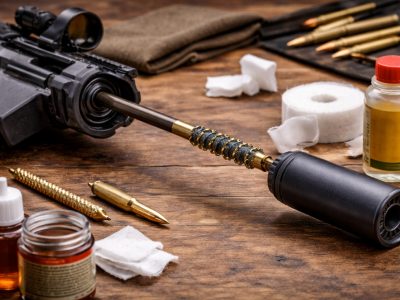
- Preparing the work area. Have a cleaning kit ready in advance. It should include a cleaning rod of the appropriate length, a rod cleaner, a visher, patches, and specialized products for removing carbon deposits and copper deposits. The working surface should be clean and well-lit.
- Initial barrel cleaning. Moisten the patch with an alkaline or universal carbon remover and draw it through the bore from the chamber to the muzzle. Move in only one direction. Repeat the procedure several times and leave the barrel for 10-15 minutes to allow the product to soften the deposits. Afterwards, use clean patches and assess their condition. If they remain dark, repeat the process.
- Mechanical cleaning. Attach a rod cleaner to the cleaning rod and make approximately 15-20 passes through the bore from the chamber to the muzzle. Do not change direction inside the barrel and work with uniform pressure. Afterwards, use dry patches to remove residual dirt and chemicals.
- Removing Copper Foam. After intensive shooting, copper deposits accumulate in the barrel. To remove them, use a special anti-copper agent. Moisten a patch with the appropriate solution and run it through the barrel. If the fabric takes on a bluish tint, this indicates a reaction with the copper. Alternate treatments with the chemical agent and dry patches until both remain clean. Do not exceed the manufacturer’s recommended exposure time.
- Final Barrel Treatment. After cleaning, run several patches lightly moistened with neutral gun oil over the barrel. This will create a thin protective film on the surface. Also lubricate the main components of the gun.
After cleaning, reassemble the gun in reverse order, following the manufacturer’s instructions. Ensure all components are installed correctly and the mechanisms operate smoothly, without any unusual sounds or binding. Only after this is the weapon ready for storage or further use.
Main Areas
The main area of a rifled weapon that requires thorough cleaning is the barrel, as this is where carbon and copper deposits accumulate. In addition to the barrel, it is essential to clean the bolt group, bolt carrier, and receiver, as these components come into contact with the combustion products of the propellant and gradually become contaminated. If the weapon is equipped with a gas-operated mechanism, it should also be disassembled and cleaned of carbon deposits. After completing this procedure, the assembly must be properly reassembled and checked for smooth and proper operation.
Cleaning Tools and Accessories
Proper cleaning of a rifled weapon after firing is impossible without the right tools. A basic cleaning kit should include:
- Cleaning rod. The main tool used to pass rods and patches through the barrel. The best choice is a one-piece carbon fiber model with a bearing in the handle. The bearing allows the cleaning rod to rotate with the barrel rifling, reducing the risk of damage.
- Yorzhi. These are used to mechanically remove carbon deposits, lead, or copper deposits. Brass or bronze models, which clean the surface without damaging it, are preferred.
- Patches. These are used to apply chemicals, remove contaminants, and perform final finishing on the barrel. Patches made of lint-free material are best, as they do not leave particles inside the bore.
- Chamber Guide. This is installed on the receiver side and centers the cleaning rod. It prevents chemicals from entering the mechanism and protects the rim of the chamber from damage.
- Visher. Used to secure patches.
In addition to tools, specialized chemicals are essential for high-quality cleaning of rifled weapons. Depending on their purpose, they are divided into several main types:
- Soot removers dissolve gunpowder combustion products and carbon deposits.
- Anti-copper agents remove copper residue from the rifling.
- Universal agents clean the barrel of carbon deposits and partially remove copper deposits.
When cleaning rifled carbines and rifles, use only specialized gun cleaning products. Aggressive chemicals can damage the barrel coating or cause corrosion.
Typical Cleaning Mistakes
Even experienced shooters sometimes make mistakes when caring for rifled weapons. Let’s look at the most common ones:
- Using inappropriate tools. Steel brushes or abrasive materials can scratch the barrel bore and damage the rifling. Only brass or bronze tools should be used for cleaning.
- Cleaning the barrel in the wrong direction. Do not move the cleaning rod from the muzzle to the chamber. Work should be performed from the chamber to the muzzle to avoid damaging the rifling and the barrel rim.
- Using household chemicals. Using solvents or aggressive cleaners not intended for firearms can damage the finish and cause corrosion. Use only specialized cleaners.
- Poorly removing chemical residue from the barrel. After using gun cleaning products, they must be completely removed. Failure to do so will cause the chemicals to continue to react with the metal, potentially causing damage. After cleaning, the barrel must be treated with neutral oil and wiped dry.
- Applying too much oil to the gun. Too much oil will attract dust and combustion residue, hindering the mechanism’s operation. Apply a thin layer only to friction areas.
- Lack of regular maintenance. Even a few dozen shots leave carbon and copper deposits in the barrel. If not cleaned, these contaminants will harden and become more difficult to remove.
Storing Rifled Weapons After Cleaning
After a thorough cleaning, it’s important to create proper storage conditions for your rifled weapon:
- Temperature. The optimal room temperature should be between +5°C and +25°C. Avoid sudden temperature changes, as they can cause condensation inside the barrel and mechanisms.
- Humidity. Air humidity should not exceed 50%. High humidity significantly increases the risk of corrosion, even on well-lubricated surfaces.
- Avoid direct sunlight. Prolonged exposure of your rifle to sunlight can negatively affect the coating of its metal and polymer parts.
Rifled weapons should be stored in a gun safe, muzzle down. A safe protects it from unauthorized access, mechanical damage, and partially stabilizes the microclimate.
Every time you clean a rifle or carbine, you invest in the longevity of the barrel, the accuracy of your shots, and your own safety. Regular gun maintenance should become a mandatory part of your shooting practice. It’s not a formality or a routine, but a manifestation of your responsibility.