How a Gun Silencer Works: An Overview of Types and Impact on Firing
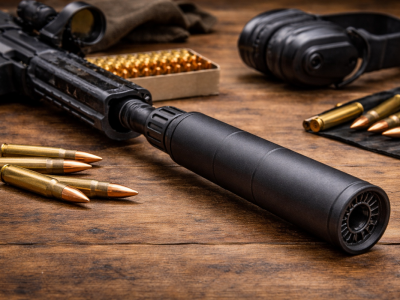
A gunshot is a complex process that, in a split second, involves an explosion and rapid expansion of gases, creating that loud sound we associate with gunfire. But what if this sound could be significantly reduced? This is indeed possible thanks to a suppressor (sound moderator). This device alters the acoustic signature of a gunshot and influences the overall behavior of a weapon. In this article, we’ll explore what a sound moderator is, how it works, the different types available, and how this device affects a weapon’s behavior.
How a Gun Silencer Works
To understand how a gun silencer works, it’s first important to understand where the gunshot sound comes from. The main source of noise is not the bullet itself, but the propellant gases that escape from the barrel at high speed after firing.
A suppressor works by containing these gases. When a bullet passes through the device, it is ejected, while the gases are trapped within its housing. There, they pass through a system of chambers and baffles, where:
- they lose velocity;
- they cool;
- they gradually expand.
This significantly reduces the outlet pressure, and the gunshot sound becomes quieter. It is important to understand that a silencer cannot completely muffle the sound. It simply changes its character.
Types of Gun Sound Moderators
Sound moderators, depending on their design, are divided into three main types:
- Chambered (classic). These have a system of baffles and chambers inside that disperse and slow down the propellant gases. They provide consistent noise reduction and are suitable for most applications.
- Monoblock. These are manufactured as a single, integral structure. They are durable, reliable, and better able to withstand intense shooting.
- Modular. These consist of several sections that can be added or removed. This allows you to adjust the length of the suppressor and the degree of noise suppression depending on the situation.
Suppressors for weapons are also divided into two types based on their installation method: threaded and quick-release. The first type of suppressor screws directly onto the barrel threads. This is a simple and reliable solution without unnecessary mechanisms. The second type of sound suppressor is installed on the weapon using special mounts or muzzle devices. This allows them to be quickly removed and installed.
How does a silencer affect shooting?
A sound moderator changes not only the sound of the shot, but also the behavior of the weapon. How does a silencer affect shooting? First of all, it is felt in the recoil. Due to the fact that some of the powder gases are retained inside the device, the shot impulse becomes softer. The gun rises less, and the shooter returns to the aiming line more quickly. The second issue is the sound and hearing load. The shot becomes significantly quieter and less abrupt, which reduces fatigue during training.
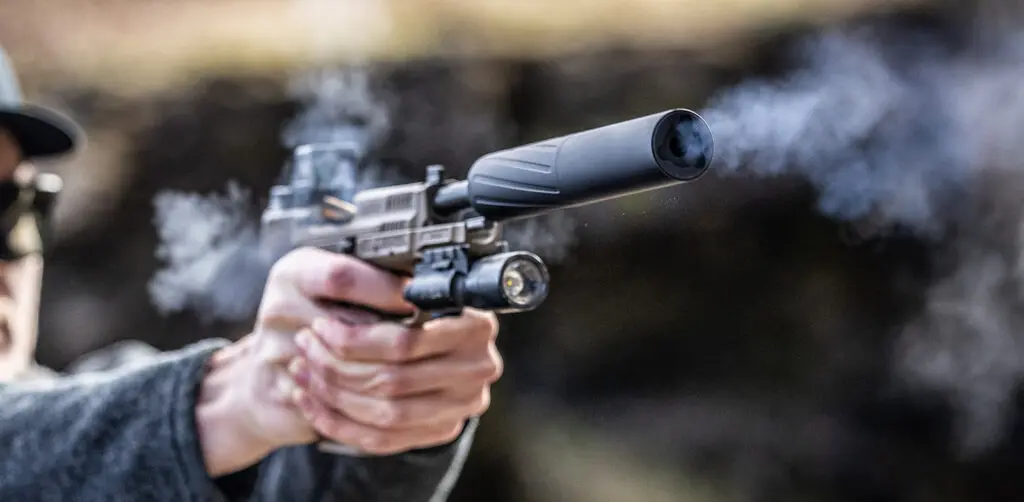
It should be noted that installing a silencer may change the point of impact. This is normal, due to changes in weight and barrel vibration. This is why it is necessary to sight in the weapon after installing a silencer.
Advantages and Disadvantages of Weapon Silencers
A silencer is This device has many advantages. Among them, it’s worth highlighting:
- Comprehensive reduction of factors that reveal the shooter’s location. A suppressor changes the shot’s sound signature in several ways. First, it reduces the sound signature, making it more difficult to pinpoint the shooter’s exact location, especially at a distance. Second, it significantly reduces or completely eliminates muzzle flash. This is critical in the dark, as it is one of the main factors that reveals the shooter’s position.
- Less hearing strain and improved interaction. The shot’s volume becomes lower and less harsh. This reduces hearing strain during intense shooting or practical training at the shooting range. If you are interested in such training, check out Darwin shooting range prices in Lviv and choose a convenient way to visit our shooting club.
- Better weapon control. A suppressor affects the gas flow, which changes the shot’s impulse. Muzzle rise is reduced, and shooting itself becomes more controlled. This allows you to return to target more quickly and execute a series of shots more consistently.
- Durability and versatility of modern models. High-quality suppressors are made of durable materials designed to withstand high temperatures and loads. Most suppressor models have standard mounting types, so they can be used with various platforms as long as the threads or adapter are compatible.
However, it’s important to discuss the disadvantages of suppressors. These are mainly:
- Change in weapon dimensions. A sound suppressor increases the length of the weapon and adds weight to the end of the barrel. This affects its balance.
- Shift in point of impact. Installing a suppressor changes the behavior of the barrel when firing. In most cases, this leads to a shift in the point of impact.
- Heating during firing. The sound suppressor heats up after a series of shots. This limits the ability to touch it and requires caution when handling.
- Weapon contamination. Some gases return to the system, causing the weapon to become dirty faster. Therefore, it requires more frequent cleaning.
How to choose a suppressor for a gun?
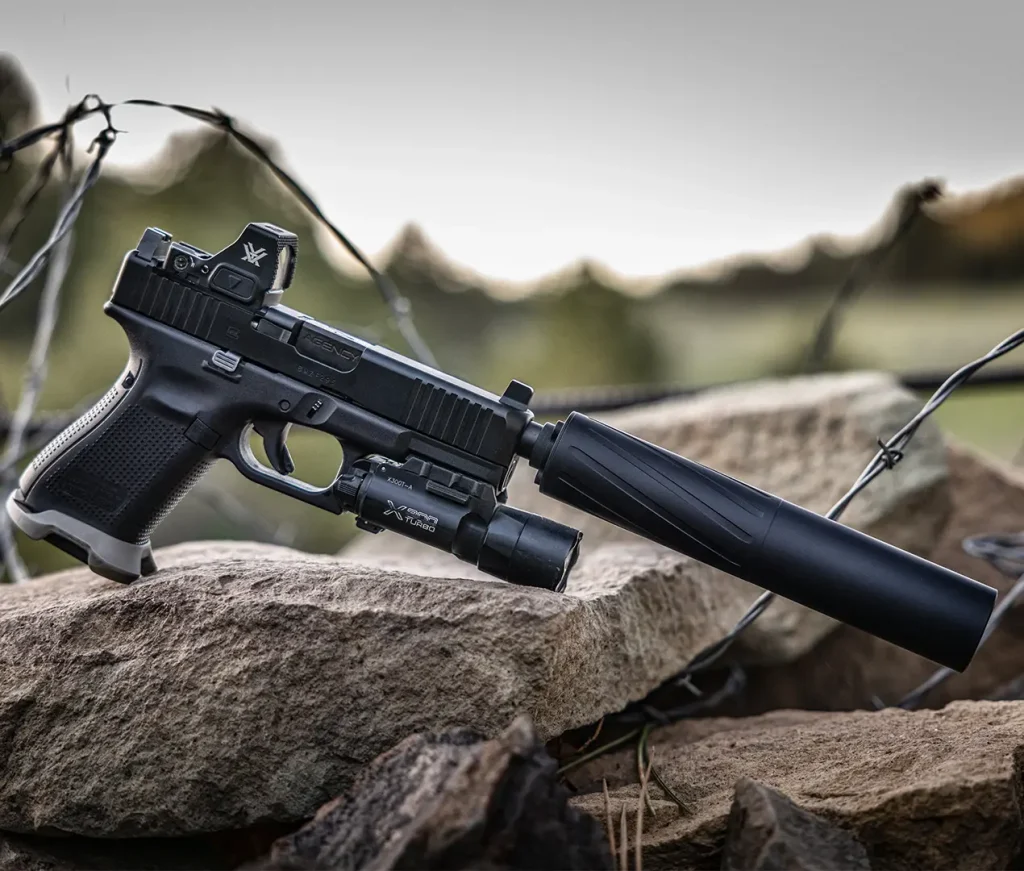
To ensure a suppressor works effectively and doesn’t cause problems, there are several factors to consider when choosing one:
- Caliber. The suppressor must be designed for the caliber of your weapon. Using a device designed for a smaller caliber may damage or rupture the suppressor.
- Muzzle threads. Before purchasing a sound moderator, be sure to check the thread type and pitch on the barrel (e.g., 1/2 x 28, 5/8 x 24, M14 x 1L, M16 x 1, etc.). The device must fully comply with these parameters.
- Mounting Type. Threaded mounting is a simple and reliable solution for permanent use. A quick-release mount is a good choice if you plan to use the suppressor on multiple weapons or remove it frequently.
- Body Material. Titanium is lightweight, durable, and withstands high temperatures well. Stainless steel is strong and durable, but is heavier. Aluminum is the lightest and most affordable option, but has a shorter lifespan.
- Design. Dismountable suppressors are easier to maintain and clean. Non-dismountable suppressors are more durable and can withstand high temperatures better.
- Dimensions and Weight. The larger the suppressor, the better its muffler. However, with increasing size comes an increase in the weight and overall length of the weapon, which can affect its balance and maneuverability.
The main rule when choosing such a device is to determine the purpose of the weapon’s suppressor. After that, find a balance between its effectiveness, weight, and ease of use.
How to install and care for a suppressor?
Installing a suppressor is a crucial process, the shooter’s safety and the service life of the weapon depend on its proper execution. Installation must be carried out strictly in accordance with the manufacturer’s instructions.
Sound moderator installation procedure:
- Make sure there are no rounds in the chamber or magazine. Check that the weapon’s caliber exactly matches the caliber of the suppressor.
- Inspect the muzzle threads and barrel of the weapon. They should be clean, free of carbon deposits, damage, and deformation. Also inspect the suppressor itself for cracks, defects, and contamination.
- Screw the sound suppressor directly onto the muzzle threads. Do not use any washers, spacers, or other foreign elements unless specified by the manufacturer.
- First, tighten the suppressor by hand until snug. Do not apply excessive force. If you feel significant resistance, stop and check the threads and ensure the device is installed correctly.
- Make sure the sound suppressor is installed evenly. To do this, pull the bolt (or open the bolt carrier) and look through the barrel at a light source. The clearance should be perfectly round and centered. If there is any movement, the suppressor is not installed correctly. In this case, do not fire.
Regarding suppressor maintenance, after each shooting session, especially if more than 20-30 shots have been fired, the device should be removed and allowed to cool completely. Do not clean a hot suppressor. After cooling, the outer surface can be wiped with a dry cloth or a cloth slightly dampened with a special cleaner to remove carbon deposits and soot.
Internal cleaning depends on the suppressor type. Disassemblable models are disassembled according to the manufacturer’s instructions, after which the chambers and baffles are cleaned of powder deposits with special gun cleaning products. Non-disassemblable suppressors are cleaned only from the outside. A special cleaner can be poured inside, after which the device must be thoroughly rinsed and dried.
It is important not to use aggressive chemicals that could damage the internal coatings or seals of the suppressor. After cleaning, the silencer should be stored in a dry place, separate from the weapon, preferably in the original packaging or a special case.