How to Learn to Shoot an Assault Rifle: A Step-by-Step Guide for Beginners
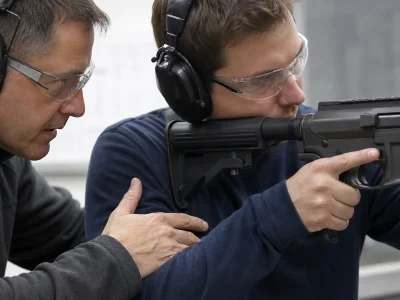
Shooting an assault rifle only seems simple at first glance. Most beginners believe that all they need to do is pick up the gun, aim it at the target, and pull the trigger. In reality, shooting accuracy depends on proper stance, grip, aiming, trigger control, and recoil control. These skills determine whether you’ll hit the center of the target.
In this article, we’ll explain how to learn to shoot an assault rifle correctly, examine the basic elements of proper shooting technique, and explain what you need to do to quickly improve your results.
Is it possible to learn to shoot an assault rifle on your own?
Theoretically, yes. You can independently learn the design of an assault rifle, the rules of safe weapon handling, the basics of aiming, and the technique of firing. However, without practice and an instructor’s support, it’s much more difficult to develop proper skills and avoid mistakes.
During independent training, shooters often hold the rifle incorrectly, assume an unstable position, pull the trigger abruptly, or operate the sights incorrectly. Over time, such errors become ingrained, making them much more difficult to correct.
That’s why, if you’re just starting out with firearms, the best solution is to enroll in classes at our shooting range, led by an experienced instructor. This will help you quickly master proper shooting technique, learn how to handle the weapon, and lay the foundation for further independent training. You can find our shooting range prices by following the link.
Basic Safety Rules Before Beginning Training
Before beginning automatic rifle training, it is necessary to master the basic gun handling rules. These are the rules that help prevent accidents and are mandatory for all shooters.
The basic safety rules for working with firearms are as follows:
- Check the technical condition of the weapon before training;
- Wear ear protection and goggles when shooting;
- Always assume the weapon is loaded, even if you are sure otherwise;
- Never point the muzzle toward people or anywhere you do not plan to shoot;
- Keep your finger off the trigger until you are ready to fire;
- Before shooting, make sure there are no people, animals, or objects behind the target that could be damaged;
- Do not leave your weapon unattended in the shooting area;
- Carefully follow all instructor commands and do not leave the firing line without permission with your weapon in your hands.
Only after these rules have become a habit can you move on to learning to fire an assault rifle.
Preparing to Fire an Assault Rifle
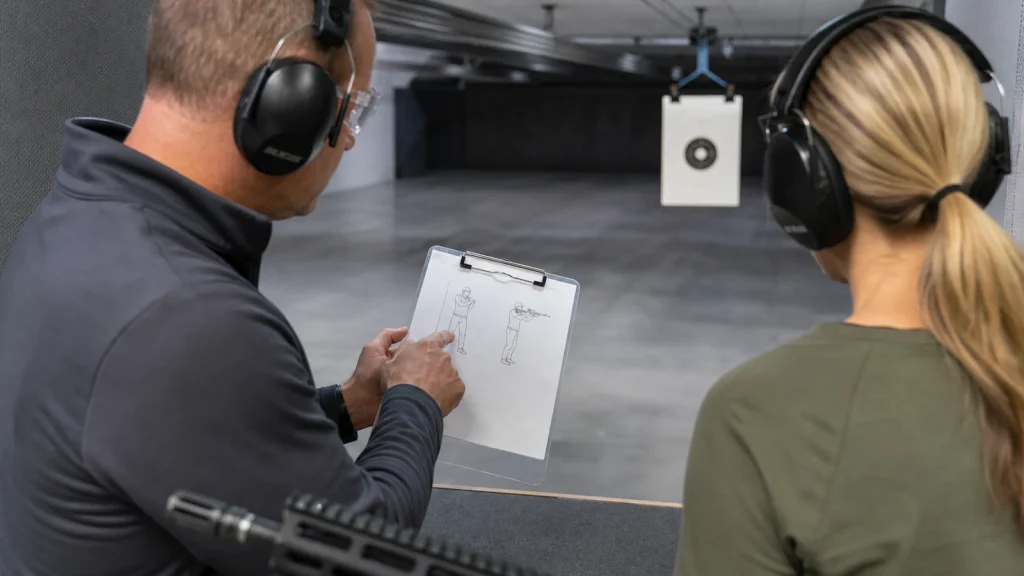
Shooting accuracy depends largely on proper preparation. During shooting, bullets are unlikely to hit the target if you hold the rifle incorrectly and your body position is unstable.
How to Hold an Assault Rifle Properly
Let’s figure out how to hold an assault rifle correctly, as this will allow you to better control the weapon while shooting. Your dominant hand should grip the pistol grip tightly. The index finger should rest along the receiver above the trigger guard and move to the trigger only immediately before firing. The elbow of the dominant hand should not be raised excessively.
The second (non-dominant) hand should hold the rifle by the fore-end or near the base of the magazine. In modern tactical shooting, a “long grip” is often used, where the hand is extended as far forward as possible along the fore-end, with the thumb on top. This grip improves muzzle rise control and allows for faster transfer of fire between targets.
The weapon should be held with both hands, creating a triangle between the shoulders and the rifle. The non-dominant hand should lightly press the rifle against the shoulder, ensuring firm contact between the buttstock and the body.
Stance, Sling, and Body Position
Proper body position helps better control recoil and return the weapon to the aiming line more quickly after each shot. Firing an assault rifle can be done from the following positions:
- Prone. The primary support is provided by the elbows, angled outward, creating a stable three-point support.
- Kneeling. For right-handed shooters, it is advisable to rest the elbow of the non-dominant hand on the kneecap rather than on the soft tissue of the leg.
- Standing. The feet should be approximately shoulder-width apart, the knees slightly bent, and the body leaned slightly forward.
Depending on the chosen stance, the body should be turned toward the target at approximately 30-45°.
Proper loading of the assault rifle is equally important. The buttstock should rest against the shoulder notch, and the cheek should be positioned uniformly on the buttstock. This allows your eye to align with the sights, which positively impacts shot accuracy.
How to Aim an AK-74 Correctly
To shoot an AK accurately and correctly, you need to know how to aim. This weapon uses mechanical sights—the front sight and rear sight. Before firing, you need to align them so that the top edge of the front sight is exactly in the center of the rear sight’s notch and is level with its top edges. This position is called a “level front sight.”
One of the most common mistakes beginners make is trying to focus their gaze on the target. In fact, the human eye is unable to clearly see the front sight, rear sight, and target simultaneously. Therefore, to aim the AK-74 correctly, your gaze must be focused on the front sight. The rear sight and target may remain slightly blurred.
How to Shoot an Assault Rifle Correctly
Once you’ve mastered the correct grip, stance, and aiming, you can proceed to actually firing. This process consists of several steps:
- Assume the starting position. Before firing, the assault rifle should be positioned with the sling slung over your shoulder as far as possible. Place your feet approximately shoulder-width apart and bend your knees slightly. Lean your body forward at approximately 45°. Point the barrel of the assault rifle toward the target at an angle of approximately 45°, and press the butt firmly against your shoulder. With your non-dominant hand, hold the assault rifle by the fore-end or near the base of the magazine (depending on your shooting technique).
- Load a round into the chamber. To do this, grasp the rifle with your dominant hand by the pistol grip, keeping your index finger along the receiver outside the trigger. Then, set the safety to the “Fire” position, pull the bolt carrier back as far as it will go, and release it to automatically chamber a round. Aim the rifle at the target. Raise the weapon to the line of sight using the shortest possible path. The buttstock should rest firmly against the shoulder notch or upper chest muscle, your head should remain upright, and the sights should be at eye level. Keep your elbows close to your body. Then, align the aiming point with the center of the target.
- Take the shot. Before firing, eliminate all distractions. Take a deep breath, then exhale and hold it briefly. This is when your body is most stable. Move your index finger to the trigger, squeezing it smoothly and evenly. After firing, remove your finger from the trigger and return the rifle to the safe position by lowering the barrel.
Remember one important rule: don’t rush. Even during dynamic shooting, proper technique is always more important than speed. Increase your tempo only after all the basic skills have become automatic.
Typical Mistakes Beginners Make When Shooting
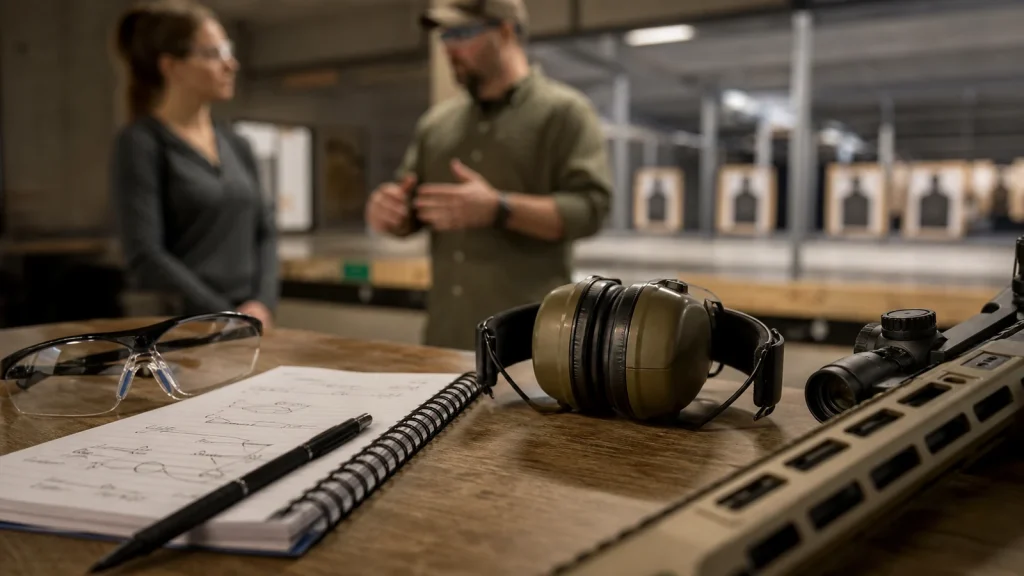
When first learning to fire an assault rifle, most shooters make similar mistakes. The most common ones include:
- Incorrect buttstock position. Beginners often rest the buttstock against their shoulder or position it too low. This causes the rifle to bounce back more when fired, reduces recoil control, and can cause bruising on the shoulder.
- Body Leaning Back. Fearing recoil, many beginners instinctively lean back and straighten their legs completely. This shifts the shooter’s center of gravity, causing them to lose stability after firing and have to re-aim the weapon.
- Incorrect Head Position. Instead of resting their cheek on the buttstock, beginners tilt their cheekbones to the side. This complicates proper aiming and quickly leads to neck muscle fatigue.
- Weak Forend Grip. If the non-dominant hand isn’t holding the forend firmly enough and isn’t pulling the rifle toward the shoulder, the weapon begins to shift after each shot, negatively impacting accuracy and rate of fire.
- Anticipating the Shot. Before pulling the trigger, many shooters involuntarily tense their muscles, close their eyes, or jerk the trigger. This causes the weapon to shift before the bullet leaves the weapon, and hits consistently deviate from the aiming point.
- Focusing on the target. When shooting with iron sights, your gaze should be focused on the front sight. Trying to focus on the target disrupts the alignment of the front and rear sights, which reduces shooting accuracy.
How shooting training works at a shooting range with an instructor
Assault rifle shooting training at our shooting range in Lviv follows a program that allows you to gradually master all the necessary skills. The program may vary depending on the shooter’s skill level, but typically consists of the following stages:
- Safety briefing. The instructor explains weapons handling rules, firing range procedures, basic commands, and safety requirements.
- Theoretical training. The shooter learns to use a Kalashnikov assault rifle or other weapon. They become familiar with the design of the rifle, its operating principles, loading and unloading procedures, and aiming principles.
- Practice without ammunition. Before the first shots, the shooter practices proper grip, stance, positioning, aiming, trigger, and weapon control without using live ammunition.
- First shots. After preparation, the shooter moves on to exercises with live ammunition. The instructor monitors each stage, helps correct errors, and explains how to improve accuracy.
- Practice of various exercises. Depending on your skill level, training may include shooting from different positions, changing magazines, working with multiple targets, and other practical elements.
At the end of the session, the instructor will review any mistakes made, evaluate your shooting results, and provide recommendations for further skill improvement.
How to Improve Your Shooting Skills Faster
Assault rifle shooting skills develop gradually. However, there are several recommendations that will help you quickly improve your results:
- If possible, train under the supervision of an instructor who will be able to promptly spot and correct errors.
- Visit the shooting range regularly, as consistent training produces better results than infrequent, lengthy sessions.
- Automatize proper stance, grip, and trigger handling.
- After each series of shots, analyze your results and try to understand the cause of each miss.
Almost anyone can learn to shoot an assault rifle confidently and accurately. The key is to take your time, maintain proper technique, and practice regularly. With each session, you’ll gain better control of the weapon, aim faster, and shoot with greater confidence. Remember that mastery of shooting isn’t an innate talent, but the result of discipline, persistence, and the ability to analyze your own mistakes. The more time you devote to training, the more confident and accurate your shots will become.