How to choose a shotgun for a beginner: an overview of the main criteria
05.02.2026Author: Charles Darwin
A shotgun is one of the most popular types of civilian firearms. It is used for shooting range training, sports, hunting, and, in some cases, for self-defense. However, for a beginner, choosing their first shotgun can be more difficult than it seems at first glance. The same model may be comfortable for one shooter and completely unsuitable for another due to balance, recoil, barrel length, or operating principle.
If you’re planning to buy your first shotgun and aren’t sure which model to choose, this article will be helpful. In it, we’ll cover the main selection criteria, explain which types of shotguns are suitable for beginners, and give you tips on what to look for when inspecting a gun before buying.
Shotgun Type: Where Should a Beginner Start?
The first and most important step is deciding on the type of shotgun. This determines how easy the weapon is to learn, how it performs during shooting, and how much attention it requires for maintenance.
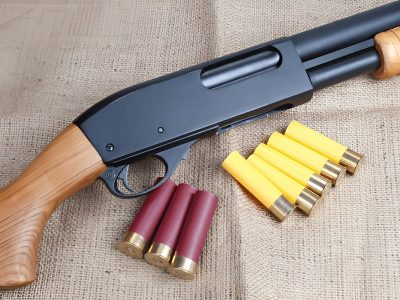
Pump-Action Shotgun
A pump-action shotgun operates manually using a sliding forend. After each shot, the shooter pulls the forend back and then forward, ejecting the spent shell and chambering a new round. This design makes this weapon extremely reliable and easy on ammunition.
For beginners, a pump-action shotgun is a good option if simplicity of design and versatility are important. It operates reliably with various types of ammunition, is easy to maintain, and is ideal for training, hunting, and basic tactical tasks. However, it’s important to keep in mind that shooting a pump-action shotgun with confidence and speed requires practice. Incorrect fore-end operation can slow the rate of fire or cause delays.
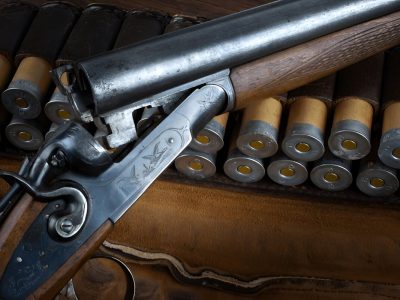
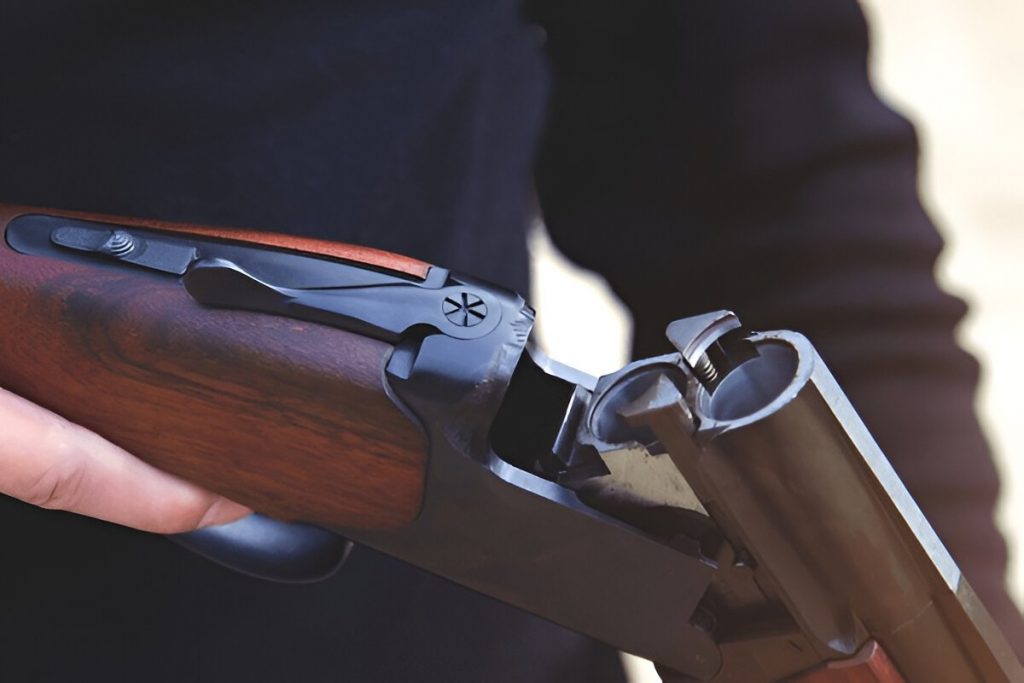
Break-action Shotgun
A break-action shotgun is the simplest type of shotgun. It has no complex mechanisms. After breaking the barrels, the shooter manually loads the cartridges, locks the gun, and fires. The number of rounds is limited to two.
For beginners, this type of shotgun is appealing due to its ease of use and high level of safety. It is ideal for learning the basics of shooting and hunting small game. Of course, it does have a drawback, and it is obvious: a low rate of fire and a limited ammunition capacity. This makes it less versatile for range training or dynamic disciplines.
Semi-automatic Shotgun
A semi-automatic shotgun reloads automatically using either gas or recoil. After firing, the mechanism pulls the bolt back, ejects the spent cartridge, compresses the recoil spring, and chambers a new round. To fire the next shot, the shooter simply pulls the trigger again.
For a beginner, a semi-automatic shotgun may seem like the most convenient option, especially if they plan to train frequently or engage in target shooting. However, it’s important to consider that such a weapon is more complex in design, requires more quality ammunition, and requires regular maintenance.
Determining the Primary Purpose
Before choosing a shotgun, you need to clearly define what you plan to use it for. The intended use of the weapon directly influences the choice of caliber, barrel length, sight type, gun weight, and even stock design. There are no universal solutions, as what works well for sport may not be suitable for hunting or self-defense.
Sport Use
When choosing a shotgun for training and sport use, it’s important to focus primarily on its technical characteristics. Over/under shotguns or semiautomatics are most often used in sporting disciplines. Over/under shotguns are valued for their predictable performance, balance, and the ability to install different chokes on each barrel. Semiautomatic shotguns have less recoil and allow for a consistent rate of fire.
The most common and versatile option in sport shooting remains the 12-gauge. It offers an optimal balance between power, accuracy, and controlled recoil. For shooters with a lighter frame or those just starting out, a 20-gauge, which has a smoother action, can be an alternative.
Hunting
When choosing a shotgun for hunting, the conditions of use and the type of game play a key role. For walked-up hunting, a moderate gun weight and ease of transferring fire between targets are important. For ambush hunting, gun stability and accuracy are more important. You should also consider what you plan to shoot. This could be shot, buckshot, or slugs.
Self-Defense
When choosing a shotgun for self-defense, the priorities are:
compactness and maneuverability;
ease of use;
predictable operation;
quick readiness of the weapon.
A short-barreled model with a barrel length of 45-51 cm and a weight of up to 3.5 kg is considered the optimal option for self-defense. These dimensions allow for quick target acquisition and effective operation in confined spaces.
As for the type of shotgun, pump-action models are most often chosen for self-defense. They are simple, reliable, and operate reliably with a variety of ammunition. Pump-action shotguns are well suited for beginners, as their operation is completely controlled by the shooter. Semi-automatic shotguns are an alternative.
Key Selection Criteria
Once you’ve decided on the type of shotgun and its primary purpose, it’s time to move on to specific specifications. For a beginner, it’s important not to chase the “maximum” parameters, but to choose a balanced option.
Gage
The most versatile and popular choice for beginners is the 12-gauge. These shotguns are suitable for most tasks. The 12-gauge accommodates shotshells, buckshot, and slugs, making it extremely versatile. The 20-gauge is lighter and smoother to fire. It’s suitable for shooters with less physical training or those planning long training sessions. However, this caliber is less versatile and designed for simpler tasks.
Barrel Length, Chokes, and Versatility
Barrel length directly impacts shot pattern accuracy, smooth target acquisition, and the maneuverability of a shotgun. For most shooting scenarios, a length of 66-71 cm is considered optimal. Shorter barrels are more convenient in confined spaces, while longer barrels are more stable when shooting at range.
A major advantage is the availability of interchangeable chokes. They allow you to adjust the shot pattern and adapt the shotgun to different distances and shooting styles. For a first shotgun, it’s advisable to choose a model with a set of interchangeable chokes. This significantly expands its capabilities.
Ergonomics and Stock
A shotgun should fit naturally in the shoulder. When quickly cocked, the sight line should align with the line of sight without the need for additional adjustments. If the stock is the wrong length or shape, the shooter will tire faster, and accuracy will decrease. Pay attention to the fit, the shape of the buttstock, the presence of a rubber butt pad, and the adjustability. For a beginner, this is more important than the brand or appearance of the gun.
Gun Weight
The weight of a shotgun directly affects its comfort. A gun that is too light has a more noticeable recoil, while one that is too heavy quickly tires the shooter during long training sessions or hunting. It is generally accepted that a shotgun’s weight should not exceed 1/22 of the user’s weight. Balance is also important. The center of gravity should not pull the barrel forward. The gun should remain controllable and stable in your hands.
Checking a shotgun before buying: what’s important?
Every shotgun has its own ergonomics, balance, and shooting behavior. Even models with similar characteristics on paper can feel completely different in real-life use. That’s why it’s a good idea to test-fire the gun at a shooting range in Lviv before making your final choice. During the practical test, you should evaluate:
как ружье ощущается в руках и удобно ли его удерживать;
появляется ли напряжение или быстрая усталость после нескольких выстрелов;
насколько легко выполнять вскидку, прицеливание и контролировать выстрел;
характер отдачи и то, остается ли оружие управляемым после выстрела;
стабильность работы механизмов во время перезарядки и стрельбы.
Even if a shotgun looks good and suits your needs in every way, a final decision should only be made after a hands-on test. A single shooting session can tell you much more about a gun than any description or reviews.
Typical Mistakes Beginners Make When Choosing a Shotgun
Even a high-quality shotgun can be disappointing if chosen incorrectly. To avoid this, it’s worth considering the most common mistakes beginners make:
Lack of a clear purpose for use. Sporting, hunting, range training, or self-defense all have different requirements for caliber, barrel length, and action type.
Neglecting to fit the gun to your anatomy. If the stock is too long, the comb is too high, or the barrel points away from the line of sight, you won’t be able to make accurate shots.
Underestimating recoil. Excessive recoil often causes shoulder pain, loss of concentration, and a reluctance to practice.
Focusing on price or brand over practice. For a beginner, it’s much more important to choose a simple, reliable, and comfortable gun than to overpay for a brand or additional features.
Another common mistake is neglecting legal requirements and associated costs. Beginners often budget only for the shotgun itself, forgetting about the mandatory procedures and expenses associated with obtaining a firearms permit. These include medical certificates, training in the equipment and weapons handling rules, purchasing a safe, insurance, etc.
Most mistakes when choosing a shotgun are not due to a lack of money, but rather haste and lack of preparation. A clear understanding of the weapon’s intended use, careful study of the characteristics of various models, and testing them in practice will help avoid disappointment. This is how your first shotgun will truly be a successful purchase.
More on this topic
26.11.2025
How to aim correctly at a shooting range
An accurate shot begins not with pulling the trigger, but with proper aim. Everything matters—grip, stance, breathing, and, most importantly, the ability to properly operate the sights. These skills must be constantly practiced. Only then will every bullet fly right to the center of the target.
I
09.12.2025
How to hold a pistol correctly
Whether you're training at the range, practicing target shooting, or mastering basic self-defense skills, the way you hold your pistol directly affects your shot accuracy, gun control, and your safety. An incorrect grip can lead not only to missed shots but also to injury, especially when handling h
01.02.2026
The difference between a pump-action shotgun and a semi-automatic shotgun
When choosing a shotgun, most shooters face a dilemma: whether to buy a pump-action or a semi-automatic. Externally, these guns look similar. However, they perform differently when firing, have different reloading mechanisms, and also differ in terms of ammunition, maintenance, and shooter skill lev
26.11.2025
How to aim correctly at a shooting range
An accurate shot begins not with pulling the trigger, but with proper aim. Everything matters—grip, stance, breathing, and, most importantly, the ability to properly operate the sights. These skills must be constantly practiced. Only then will every bullet fly right to the center of the target.
I
09.12.2025
How to hold a pistol correctly
Whether you're training at the range, practicing target shooting, or mastering basic self-defense skills, the way you hold your pistol directly affects your shot accuracy, gun control, and your safety. An incorrect grip can lead not only to missed shots but also to injury, especially when handling h
01.02.2026
The difference between a pump-action shotgun and a semi-automatic shotgun
When choosing a shotgun, most shooters face a dilemma: whether to buy a pump-action or a semi-automatic. Externally, these guns look similar. However, they perform differently when firing, have different reloading mechanisms, and also differ in terms of ammunition, maintenance, and shooter skill lev