The difference between a pump-action shotgun and a semi-automatic shotgun
05.02.2026Author: Charles Darwin
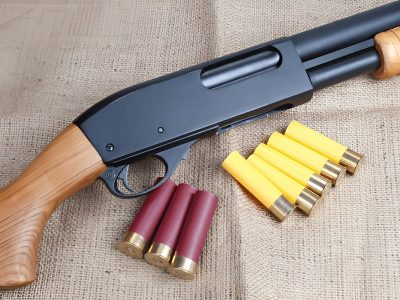
When choosing a shotgun, most shooters face a dilemma: whether to buy a pump-action or a semi-automatic. Externally, these guns look similar. However, they perform differently when firing, have different reloading mechanisms, and also differ in terms of ammunition, maintenance, and shooter skill level. That’s why choosing between a pump-action and a semi-automatic isn’t a matter of taste. It’s a matter of purpose, conditions of use, and experience. To help you understand which option is best for you, we’ve dedicated this article to comparing both types of guns. In it, we’ll examine the differences between a pump-action and a semi-automatic shotgun not only in terms of design but also in real-world use.
What’s the difference between a pump-action and a semi-automatic shotgun?
The difference between a pump-action and a semi-automatic shotgun is rooted in the weapon’s operating logic. In one case, the shooter controls all actions; in the other, the automation performs some of the work.
Pump-Action Shotgun Design
A pump-action shotgun operates manually using a sliding forend. After firing, the shooter pulls the forend back, which opens the bolt, frees the barrel, and ejects the spent cartridge. At the same time, the magazine spring feeds the next cartridge into the chamber. When the forend moves forward, a cartridge is chambered, the bolt locks, and the trigger mechanism cocks. After this, the shotgun is ready to fire again.
The key feature of the pump-action system is complete control of the reloading process by the shooter. The weapon is independent of shot energy, gas pressure, or cartridge type. That’s why pump-action shotguns operate reliably with a variety of ammunition, including low-power, training, and specialty ammunition.
Simple mechanics make the pump extremely reliable, even in challenging operating conditions. At the same time, this type of weapon requires certain skills from the shooter, as improper use of the forend can lead to delays and loss of fire rate.
Semi-automatic Shotgun Design
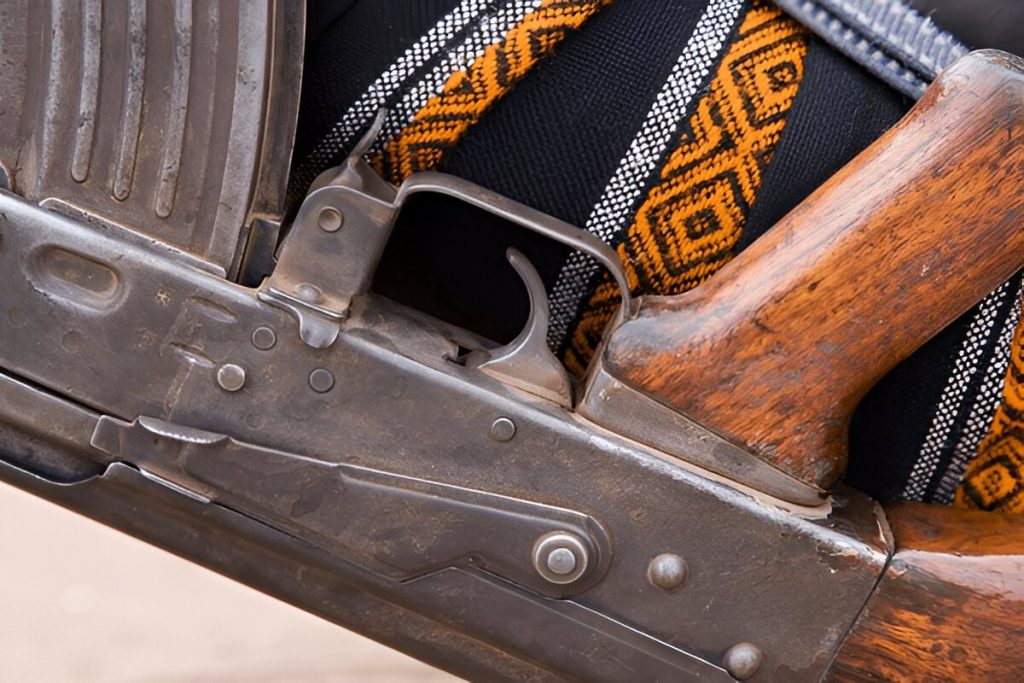
A semi-automatic shotgun reloads automatically, using the energy of the shot. Reloading occurs either by the removal of powder gases or by recoil. After firing, the automatic mechanism pulls the bolt back, ejects the spent cartridge, compresses the recoil spring, and chambers a new round. To fire the next shot, the shooter simply pulls the trigger again.
The main advantage of this system is a consistent rate of fire and the elimination of the need to manually operate the mechanism. This allows the shooter to fully concentrate on aiming and controlling the weapon. Furthermore, the automatic mechanism partially absorbs the energy of the shot, reducing the perceived recoil.
However, a semi-automatic system is more complex in design. It is more sensitive to the quality of the ammunition and requires regular maintenance and proper adjustment. Additional mechanisms increase the weight of the gun, which has a positive effect on recoil control, but can alter the balance and feel of the gun in the hands.
Operating principle in practice, not in diagrams
In diagrams, the operation of a pump-action and semi-automatic shotgun appears quite simple. However, in practical use, the difference between them becomes noticeable from the very first shots.
A pump-action shotgun constantly involves the shooter in handling the weapon. After each shot, the forend must be pressed precisely and without pauses. Incomplete or imprecise movement immediately reduces the rate of fire and can lead to delays. In practical terms, this means the shooter’s attention is divided between aiming and controlling the mechanism. At the same time, this operating principle provides a feeling of complete control over the weapon and confidence in its stable operation, regardless of the conditions of use and the type of ammunition.
A semi-automatic shotgun operates according to a different logic. After firing, the shotgun automatically performs the entire reloading cycle, and the shooter essentially only operates the trigger and sights. The rate of fire becomes more even, and attention is almost entirely focused on the target. In practice, this means less fatigue and more consistent follow-up shots. However, this convenience comes at a price. Automatic firearms require regular maintenance, high-quality ammunition, and the proper operation of all components. In the event of a malfunction, the shooter no longer directly controls the process but is forced to adapt to the mechanism’s behavior.
Rate of Fire and Transfer of Fire: What Do Tests Show?
In real-world tests, a weapon’s rate of fire is determined by how quickly the shooter can fire a series of effective shots and transfer fire between targets. This is where the difference between a pump-action and a semi-automatic shotgun becomes especially noticeable.
Semi-automatic shotguns reload automatically using a gas or inertia system. After firing, the shooter simply pulls the trigger again, and the gun is ready for the next shot. In practical tests, the average rate of fire for a semi-automatic reaches 3 rounds per second, making it effective for continuous fire.
In pump-action shotguns, the rate of fire is directly dependent on the shooter’s actions. After each shot, the forend must be manually pulled back to eject the spent cartridge and pushed forward to feed a new round. Even with proper technique, this takes time. An experienced shooter can achieve a rate of 1-1.5 rounds per second. For beginners, this rate is usually even lower.
Empty Chamber, Emergency Reloading, and Critical Scenarios
Despite the advantage of a semiautomatic in continuous fire, the situation changes in critical situations. A pump-action shotgun has the advantage of quickly bringing the gun to readiness from an empty chamber. The simple mechanics allow the shooter to quickly feed a round and fire the first shot without any additional manipulation of the bolt.
During emergency reloading, a pump-action system also operates more predictably. Thanks to its mechanical operating principle, the shooter can quickly insert an additional round into the chamber or magazine. In semiautomatic shotguns, this process is more complex and often depends on the position of the bolt, the design of the feeding mechanism, and the shooter’s skill. In a stressful situation, this can cost precious time.
Ammunition and Real-World Reliability
Both types of shotguns use the same ammunition. However, the reaction to its quality and power differs significantly. The main advantage of a pump-action shotgun is its complete ease of use. Since reloading is done manually, the shotgun operates reliably with any ammunition, regardless of its power. Virtually everything fed into the chamber will be fired.
Semi-automatic shotguns are significantly more sensitive to the quality and power of the ammunition. Proper operation requires sufficient momentum from the shot. Weak or poor-quality ammunition can cause the bolt to not fully retract, or cause delays or failures during reloading. This is why semi-automatic gun owners are forced to select ammunition according to the manufacturer’s recommendations and test it for compatibility with their guns.
Maintenance, Wear, and Care Requirements
Pump-action shotguns have a simple and reliable design, which significantly simplifies their maintenance. Basic maintenance simply requires disassembling the receiver, removing the bolt, and cleaning the barrel, magazine, and main moving parts. The absence of gas vents or inertia assemblies reduces the number of potential problem areas that can fail.
Semi-automatic shotguns are significantly more demanding in terms of maintenance. Gas systems require constant cleaning of the piston, cylinder, and vents to remove carbon deposits. Failure to do so leads to unstable operation and, ultimately, malfunction. Inertial systems are less sensitive to contamination, but still require regular cleaning of moving parts.
Comparison Chart: Pump vs. Semi-Auto
To make the right choice between a pump-action and semi-automatic shotgun, it’s worth comparing their key characteristics. The table below shows the main differences as they manifest themselves in practical use.
Characteristics
Pump-Action Shotgun
Semi-Automatic Shotgun
Reloading
Manual (trickle action)
Automatic (inertial or gas-operated)
Rate of Fire
~1-1.5 shots/sec (depending on skills) arrow)
~2-3 shots/sec
Recoil
More (all shot energy is transferred to the shooter)
Less (part of the shot energy is absorbed by the mechanism)
Empty operation
Quick readiness
Depends on the design and position of the bolt
Sensitivity to quality cartridges
Minimum
Medium or high (depending on model)
Weight (18.5–20 inches)
~3.0–3.4 kg
~3.2–3.6 kg
Magazine capacity (standard)
5+1–8+1 (with extension)
4+1–7+1 (with expansion)
Maintenance
Simple, minimum number of parts to clean
Regular, especially for gas systems
Part wear
Low
Highest
Strengths
Reliability, versatility, durability
Speed, comfort, stable pace Shooting
Weaknesses
Slower rate of fire, requires training
Maintenance and ammunition requirements
Application
Self-defense, tactics, hunting in difficult conditions
Sport shooting (IPSC/3-Gun), game hunting, dynamic shooting
Pump-action shotgun or semi-automatic – Which one is right for you?
When choosing between a pump-action and a semi-automatic shotgun, first and foremost consider the tasks you plan to accomplish with the weapon:
Hunting small and moving game. In such conditions, rate of fire and rapid transition between targets are crucial. A semi-automatic shotgun allows for a series of accurate shots without manually reloading, which is a significant advantage when hunting dove, pheasant, or duck.
Big game hunting. Here, reliability and consistent performance with various types of ammunition are paramount. A pump-action shotgun is less demanding on ammunition and easier to maintain, making it a practical choice in challenging field conditions.
Regular training. Both types of guns are suitable for basic training. A pump-action shotgun is the optimal choice for beginners due to its simplicity, durability, and lower cost. However, for dynamic disciplines or continuous fire, semi-automatics are preferred.
Self-defense. In scenarios where simplicity and predictability are important, a pump-action shotgun is often chosen. Its mechanics are easily controlled, and reliability is not affected by the type of ammunition or the state of the mechanism.
Tactical missions. In special forces, weapons are selected for specific tactics. If the emphasis is on reaction time, a high rate of fire, and minimal strain on the shooter, semi-automatic systems are usually preferred.
It’s worth noting that it’s impossible to give a definitive answer to the question of which shotgun is better: a pump-action or a semi-automatic. These are different types of weapons suited to different tasks. It’s best to try both options in practice before purchasing, following the rules for handling weapons. Personal experience will help you understand which system truly suits your goals and shooting style. And you can get it at our shooting range in Lviv.
More on this topic
26.11.2025
How to aim correctly at a shooting range
An accurate shot begins not with pulling the trigger, but with proper aim. Everything matters—grip, stance, breathing, and, most importantly, the ability to properly operate the sights. These skills must be constantly practiced. Only then will every bullet fly right to the center of the target.
I
09.12.2025
How to hold a pistol correctly
Whether you're training at the range, practicing target shooting, or mastering basic self-defense skills, the way you hold your pistol directly affects your shot accuracy, gun control, and your safety. An incorrect grip can lead not only to missed shots but also to injury, especially when handling h
21.01.2026
Weapon sighting: basic principles and stages
Shooting accuracy is not only a matter of successfully mastered skill, but the result of properly adjusting the entire shooting system. Even high-quality weapons and ammunition alone do not guarantee consistent hits. This is precisely why zeroing is necessary — it's a mandatory step in preparing a c
26.11.2025
How to aim correctly at a shooting range
An accurate shot begins not with pulling the trigger, but with proper aim. Everything matters—grip, stance, breathing, and, most importantly, the ability to properly operate the sights. These skills must be constantly practiced. Only then will every bullet fly right to the center of the target.
I
09.12.2025
How to hold a pistol correctly
Whether you're training at the range, practicing target shooting, or mastering basic self-defense skills, the way you hold your pistol directly affects your shot accuracy, gun control, and your safety. An incorrect grip can lead not only to missed shots but also to injury, especially when handling h
21.01.2026
Weapon sighting: basic principles and stages
Shooting accuracy is not only a matter of successfully mastered skill, but the result of properly adjusting the entire shooting system. Even high-quality weapons and ammunition alone do not guarantee consistent hits. This is precisely why zeroing is necessary — it's a mandatory step in preparing a c